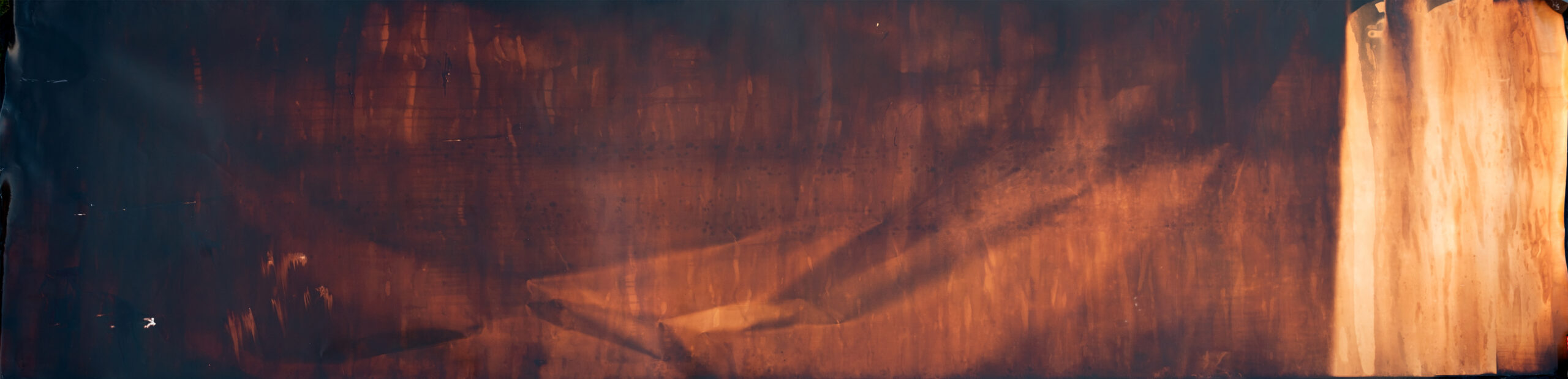
Leviathan is a mural-sized original photograph created by utilizing methods from historical magical spellbooks in order to “call to visible appearance” the spirit of Leviathan on traditional photographic paper.
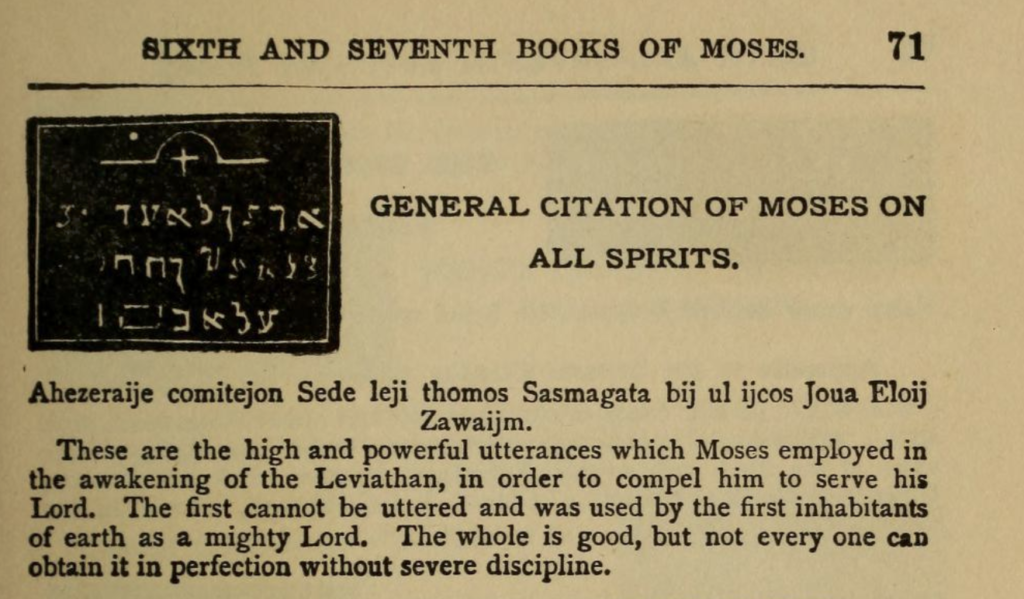
Most well known as a monstrous sea serpent mentioned in the Bible, Leviathan appears as a spirit in grimoires (books of magic spells) including the Grimoire of Pope Honorius, the Book of Abramelin, and the Sixth & Seventh Books of Moses.
Seal of Leviathan from the Grimoire of Pope Honorius, Wellcome MS 4666
“This Spirit is extremely formidable and he is a commander of twenty seven Legions. According to the report from Uverius, he has great abilities, such as being able to transmute metals, precious stones, properties of simple plants, herbs and animals and even treasures hidden in the bowels of the Earth.… His appearance is quite formidable and strikes fear, appearing in the many hideous guises of monsters and ferocious animals.… He often speaks without making himself appear in order to better trap you in his snares and he promises you many things.” – Translation from The Complete Grimoire of Pope Honorius, David Rankine & Paul Harry Barron. Avalonia Books, 2013
The process of creating Leviathan was essentially similar to that used to create the Goetigraphs, though on a much larger scale. I began by working in a manner inspired by late-19th century occult photography pioneers such as Hippolyte Baraduc and Louis Darget, the resulting image being what they may would have referred to as an “effluviograph” – a one-of-a-kind cameraless spirit photograph. This was done in the context of a magical working, primarily following the procedures as laid out in the Grimoire of Pope Honorius. Thus, a ceremony involving a magic circle, incense and calls to Leviathan were utilized in order to help coax Leviathan, noted to be reluctant to appear, to show himself on photographic paper.
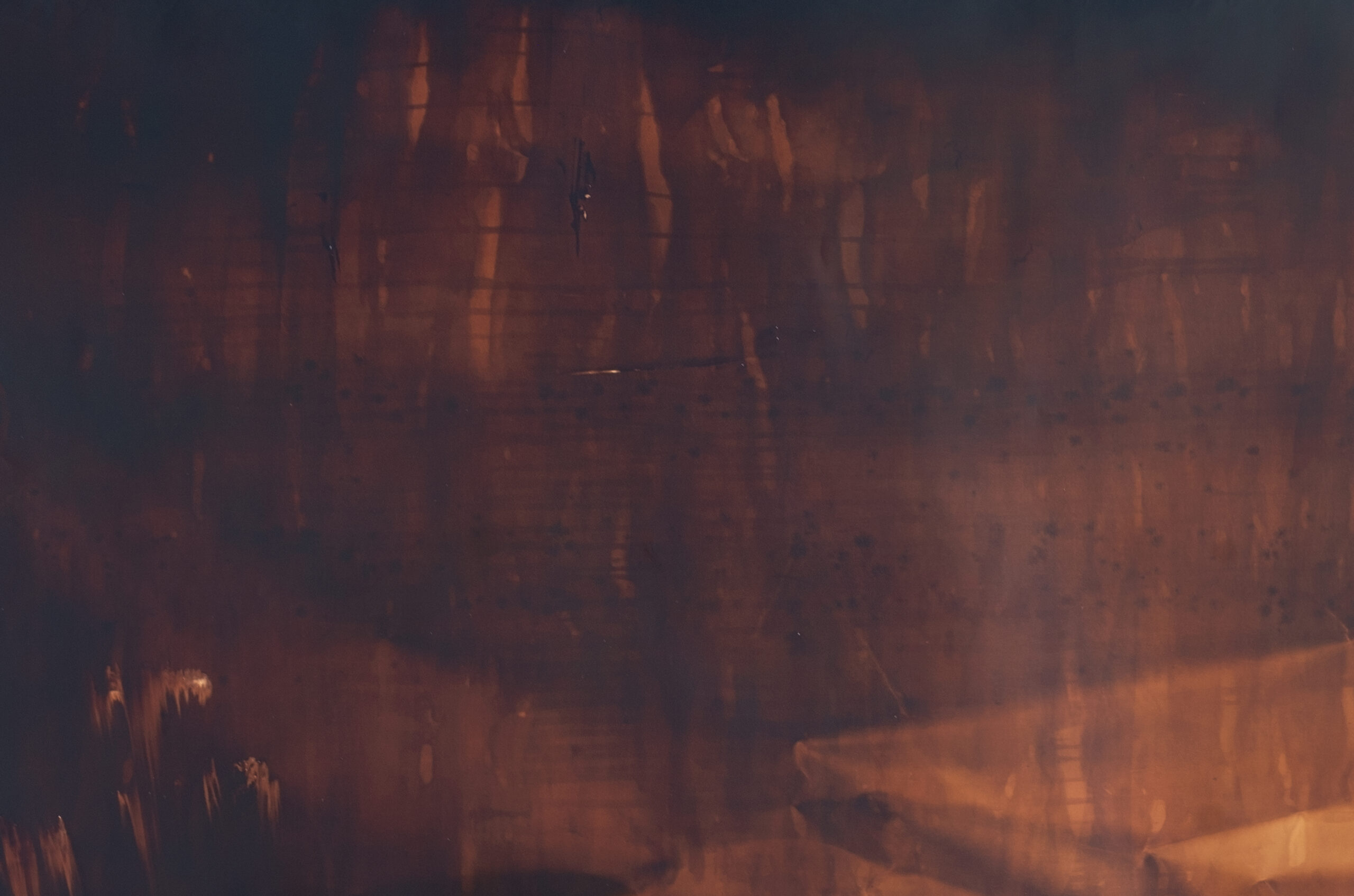
Several grimoires provide procedures for calling a spirit to show itself within an object – often a crystal (ex. Johannes Trithemius: The Art of Drawing Spirits into Crystals) Rather than use a crystal, I provided the receptive media of analog photographic paper. The result is a massive, unique photographic image filled with unexpected variations, textures and color gradations.
From the Sixth & Seventh Books of Moses, De Laurence, Scott & Co. Dated 1910, presumed to be wildly inaccurate.
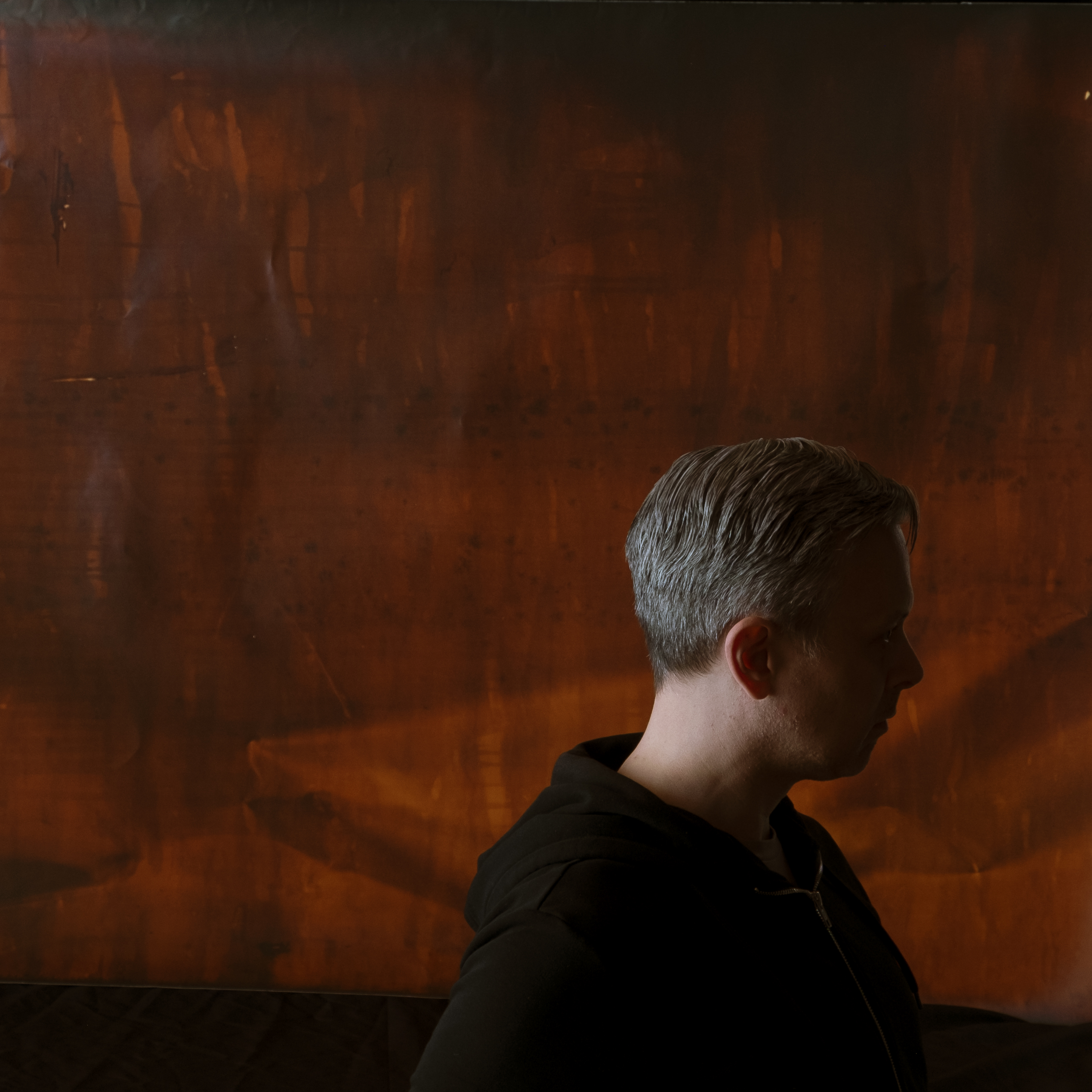
Detail of LEVIATHAN, with self-portrait for scale.